Varying views on how wisely/foolishly the casino money was
By Darryl McPherson
 |
Assume for a moment that you were a city in upstate New York where the State permitted a sovereign nation to open a casino within your borders. For that “privilege,” you get a cut of the revenue generated by the casino, after it has been laundered through the State. What would you do with that money? The State has told you to use it for economic development and infrastructure, but is that really what you want to do?
The City of Niagara Falls apparently asked itself that question and found the need for a creative answer. Numerous political observers have varying opinions on how casino revenue received from the Seneca Nation has been used.
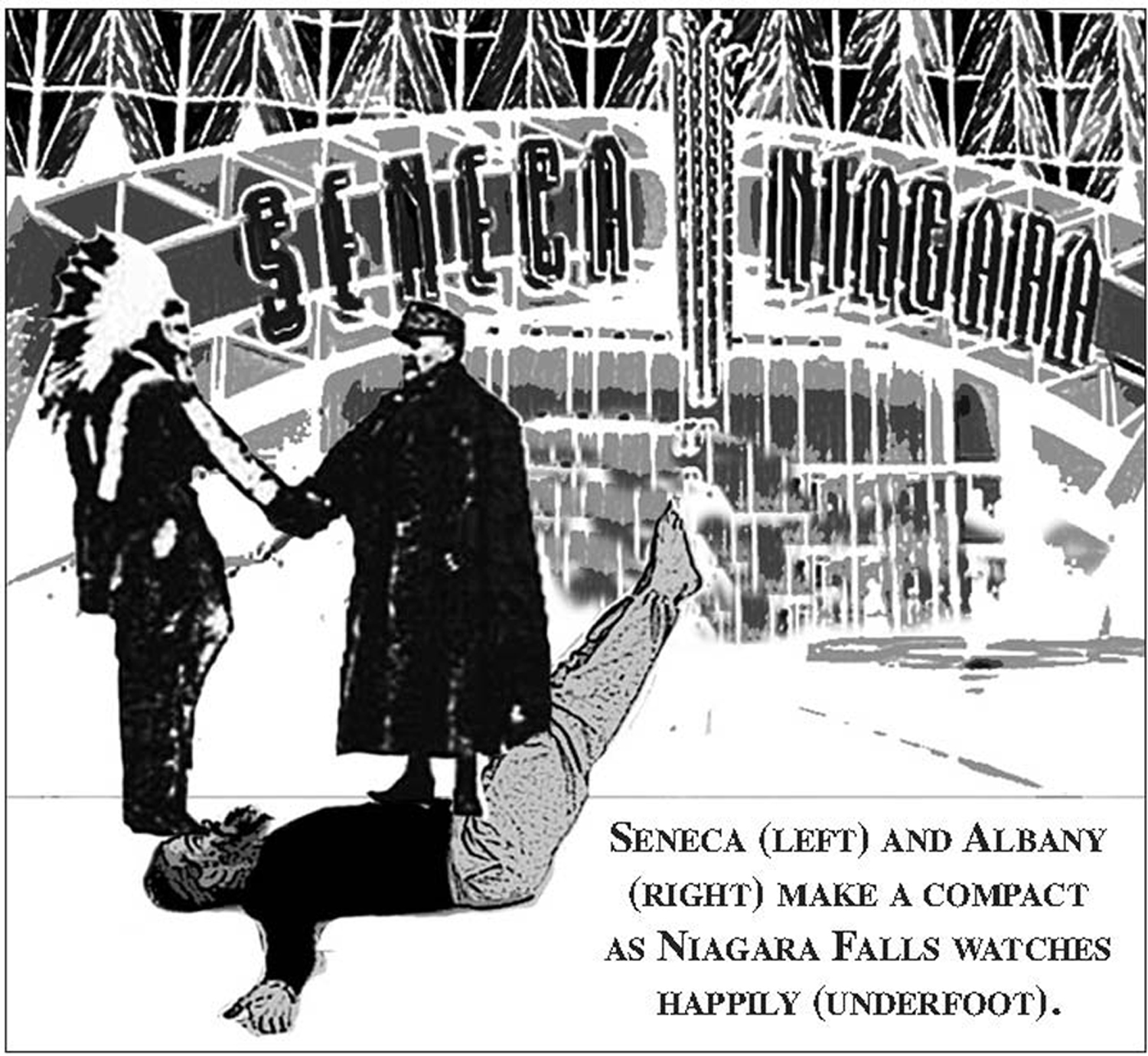
The flow of revenue has since dried up over the last three and a half years as the Senecas dispute with the State of New York over alleged violation of their Compact with the State.
Joseph Swartz, a candidate for City Council said he feels, the city “spent the money irresponsibly. They’ve spent that money to fund positions; they said back in 2007 that you couldn’t use that money for taxes, but it is okay to fund a position that has nothing to do with economic development? What they should have done, they should have funded roads and infrastructure completely with casino dollars and put that money right back into tax relief for the taxpayers. Because that’s how you create economic development. We wouldn’t have to bribe businesses to come here if we reduced their tax burden initially.”
That sentiment is shared by real estate developer and former Republican gubernatorial candidate Carl Paladino. “The City missed the point of the money,” he said. He said that the City’s taxes are too high and casino dollars could have been used to lower real estate taxes, which would have served as an incentive for businesses to invest in the City.
School Board Member and former candidate for State Senator, lawyer Johnny Destino agrees, “I would have directed the money to the tax rate for businesses and residents.”
A contrary view is held by Councilmember Kristen Grandinetti. “I think it has been spent very well previously. I think we’ve been able to use the casino money to rebuild some of the infrastructure and get things going as far as economic development and our community development. I don’t have a problem with the way any of it was spent.”
State Senator George Maziarz could not disagree more.
“Their original commitment was to use it for economic development and infrastructure repair. I wish they had done more,” said Maziarz. “There was a proposal to rebuild neighborhoods, starting around the casino, to rebuild single-family housing, offer them to casino employees, and rebuild the neighborhoods – one street at a time.
“Instead, the City did exactly what they promised they would not do. And that is use the money for their operations and maintenance expenses. In the legislation, it is written that the City can use the money for infrastructure and for economic development. I think what they’ve done is that they’ve labeled anything and everything as economic development, even paying salaries. They have 22 people working full-time between community development and economic development departments, and they pay those salaries out of casino revenue. Is that an operating cost or is that an economic development cost? They identify it as an economic development cost.
“I read in the newspaper that they were unable to hire seasonal employees at the golf course because of the lack of casino revenue money. Clearly, seasonal employees are operation and maintenance costs.
“There’s a great deal of focus on the years that the Senecas haven’t paid. But they did pay for seven years, which is equal to over 69 million dollars. So from 2003, 69 million dollars, what positive can you identify? Is crime down? Is unemployment down? Is housing better?
“I don’t say the City is not entitled to the money for the last three and a half years. They deserve to get it. I wish they would use it on different purposes, but that’s not up to me. That was left up to the Mayor and the City Council, mostly the Mayor.”
The business manager for Local 91, Dick Palladino, does not see much by way of economic development in Niagara Falls.
“I don’t see where they could spend it, for economic development, if they get it,” he said. “I don’t believe they’re going to get it. I think that it’s smoke and mirrors from George Maziarz trying to encourage people to think that he’s doing something.”
Mayor Paul Dyster does not see the issue as extremely as others.
“Since I’ve been mayor, I’ve been proud of the way we’ve spent casino cash,” he said. “I think we used it in a way that’s made a real difference in the city and I think that one of the points that evidences that is the sort of things we’re unable to do because casino cash hasn’t been delivered. We tried to use it mostly as a non-recurring revenue, but I did continue, as my predecessor did, in utilizing casino revenues to pay the debt on the public safety building, and that’s what’s caused the cash flow crunch we’re in now. We have to cover for roughly five million dollars per year with other funds because we didn’t have the casino revenues to pay that debt.”
As noted by Dyster, the Seneca Nation of Indians halted payments to the State due to their position that the State violated the Compact by allowing gambling in State –sponsored race tracks.
Councilmember Grandinetti said, “I believe the host communities should be paid directly from the Seneca Nation. I don’t think it should be filtered through the State. Because we’re the ones who are providing the public safety, we are the ones that are providing the land for it to be built on, and I think it is very unfair that a struggling community has to be put in this position.”